Notes on the Archive
On Reverence, Violence, and the Ethics of Exhibition
By Melissa Ferrer Civil • December 2025
I entered Painted Worlds: Color and Culture in Mesoamerican Art, a featured exhibition at the Nelson-Atkins Museum of Art, with a certain level of distrust. It is a bias born of living in a marginalized body, of belonging to a colonized people.
Narratives constructed within hegemonic, colonizing cultures often obfuscate or miscommunicate the truths that reside within the cultures they first colonize, then pedestalize, as busted-yet-beautiful remnants of an ancient, “dead” past.
What I encountered instead disrupted this bias.
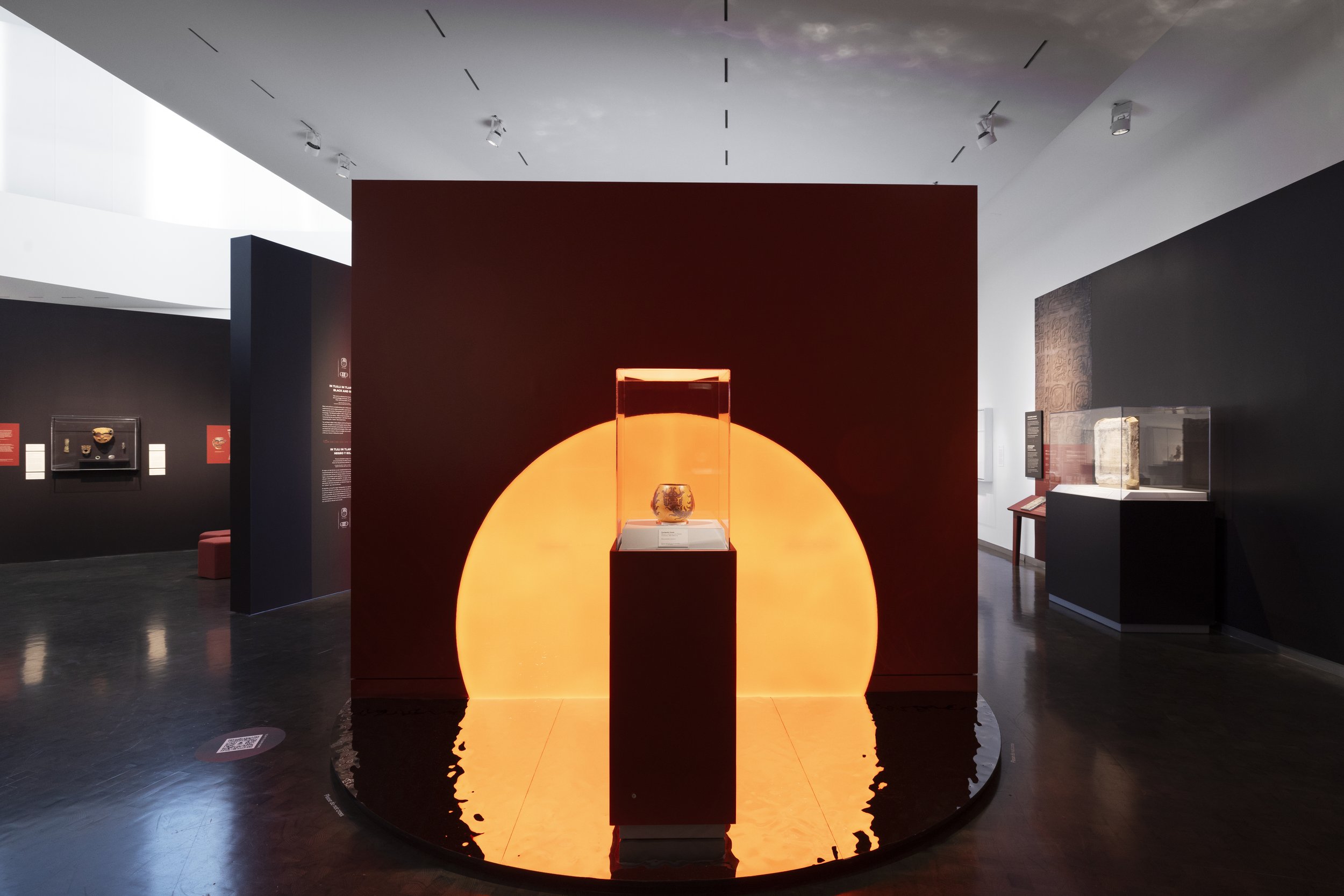
Installation view of “Painted Worlds.” Photo by Dana Anderson, courtesy of the Nelson-Atkins Museum of Art.The exhibition texts, rather than obscure complexity, acted as breadcrumbs, guiding me toward a deeper understanding of the role of art in Mesoamerican, and, by extension, every culture. In contrast to modern, diluted perspectives of artists as pleasant, abstract, non-serious makers—artists were presented as whole. They appear as vital and pivotal actors as scientist (observer and inventor), technician, and sage. Here, art is positioned as translation, as communication, as connective tissue, rather than mere decoration.
When thinking about any archive and its ideal role in society, a definition emerges: to catalogue and preserve the human story. For me, an archive is meant to be a portal—one that offers contextualization and relation to the essence of our humanity to our role in the known and unknown realms of existence. Too often, the archive is curated, exhibited, and interacted with from a point of reference as opposed to reverence. Somewhere from curation to exhibit to consumption, the archive is handled as a point of reference to glean information without an embodied understanding of the work's worth, values, sacredness, and truth.
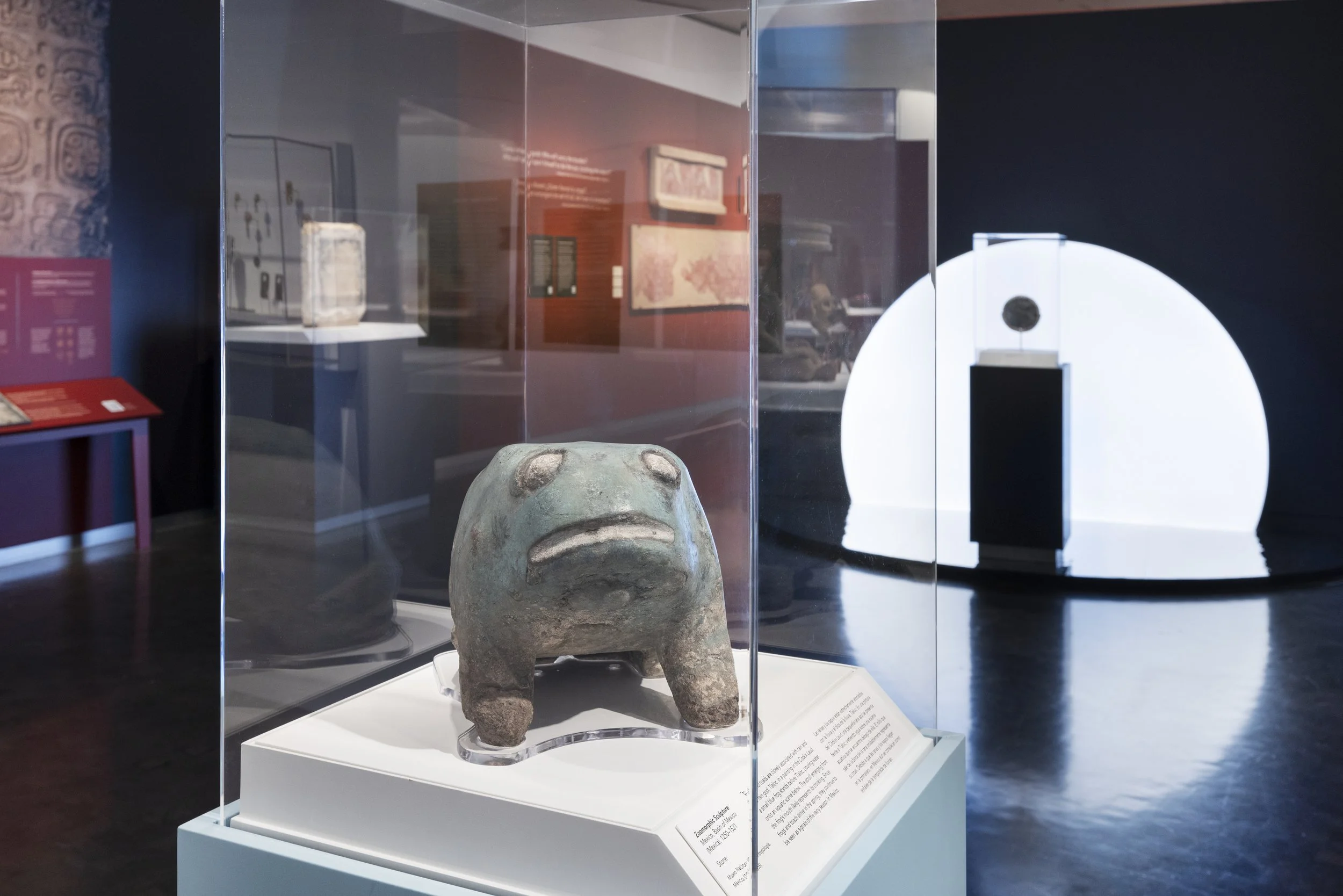
Installation view of “Painted Worlds.” Photo by Dana Anderson, courtesy of the Nelson-Atkins Museum of Art.In Painted Worlds, a label under clay sculpture models of temples, buildings, and deities reads: “These sculptures of deities were often inaccessible and may have even been wrapped in cloth, considered too powerful to be seen.” I wondered at the ethics, function, and efficacy of transforming sacred objects and effigies into objects of voyeurism and spectacle.
The word desecration came to mind.
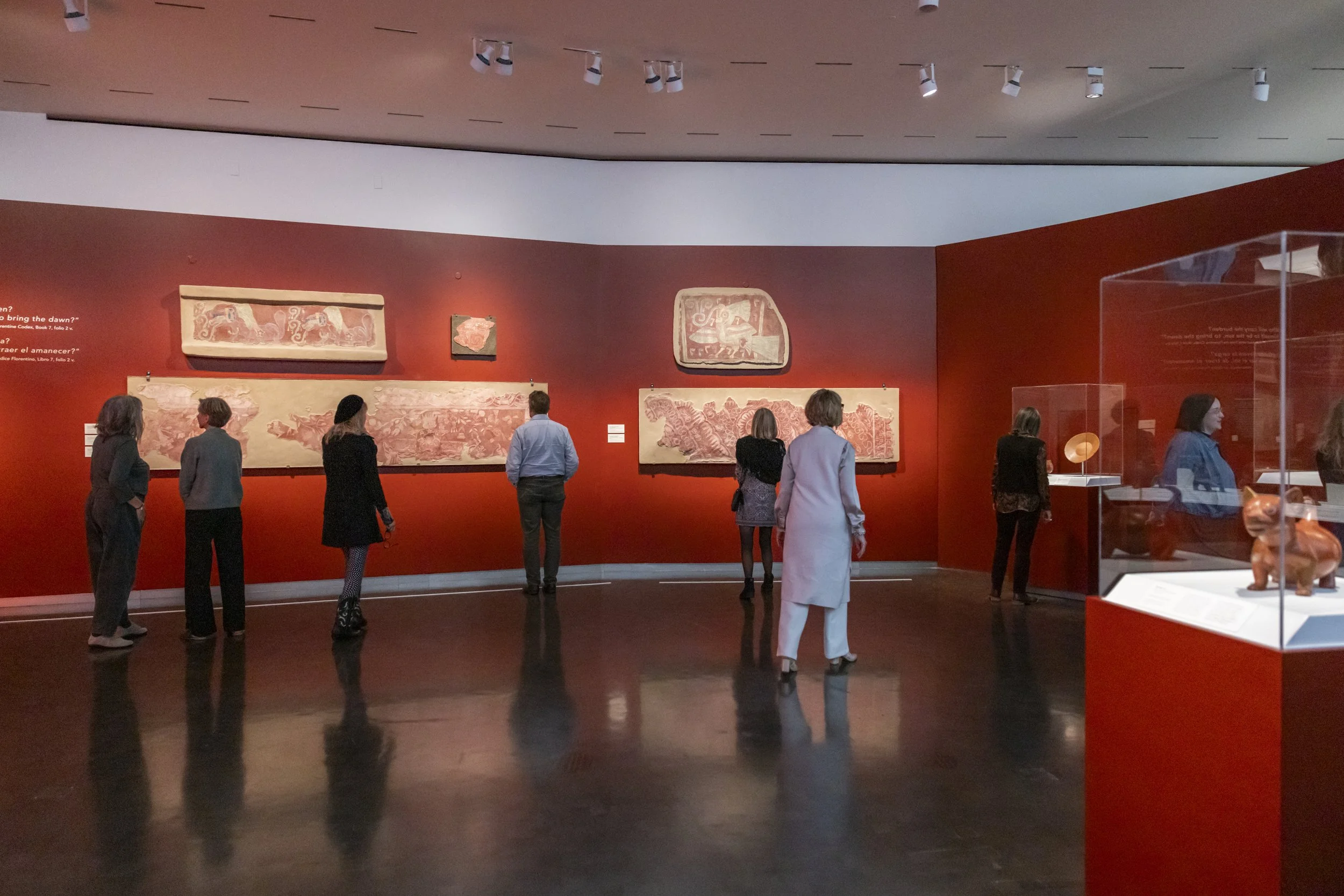
Installation view of “Painted Worlds.” Photo by Dana Anderson, courtesy of the Nelson-Atkins Museum of Art.Cultures and sacraments are encaged behind bars crafted by the ignorance in our gaze, desensitized to reverence. If there is a connection between the desecration of spiritual materials into “art” and our society’s proclivities for overconsumption, exploitation, destruction, and abuse of life’s resources, what story does the funding of these, and other, archives tell?
How can those with privilege—that is, people who have greatly profited from societies that oppress, torture, massacre, and exploit the global majority—ethically uplift the communities they have dehumanized and delegitimized? How do those without structural privilege avoid falling into abstraction, tokenization, the concrete prison of pedestalization, or other poisonous effects of being “chosen” by hegemonic power?
I consider these questions as I create and engage with art in our world. Perhaps it is the question that spurned Saidiya Hartman to pen, “l read the archive is to enter a mortuary; it permits one final viewing and allows for a last glimpse of persons about to disappear into the slave hold,” in Lose Your Mother.
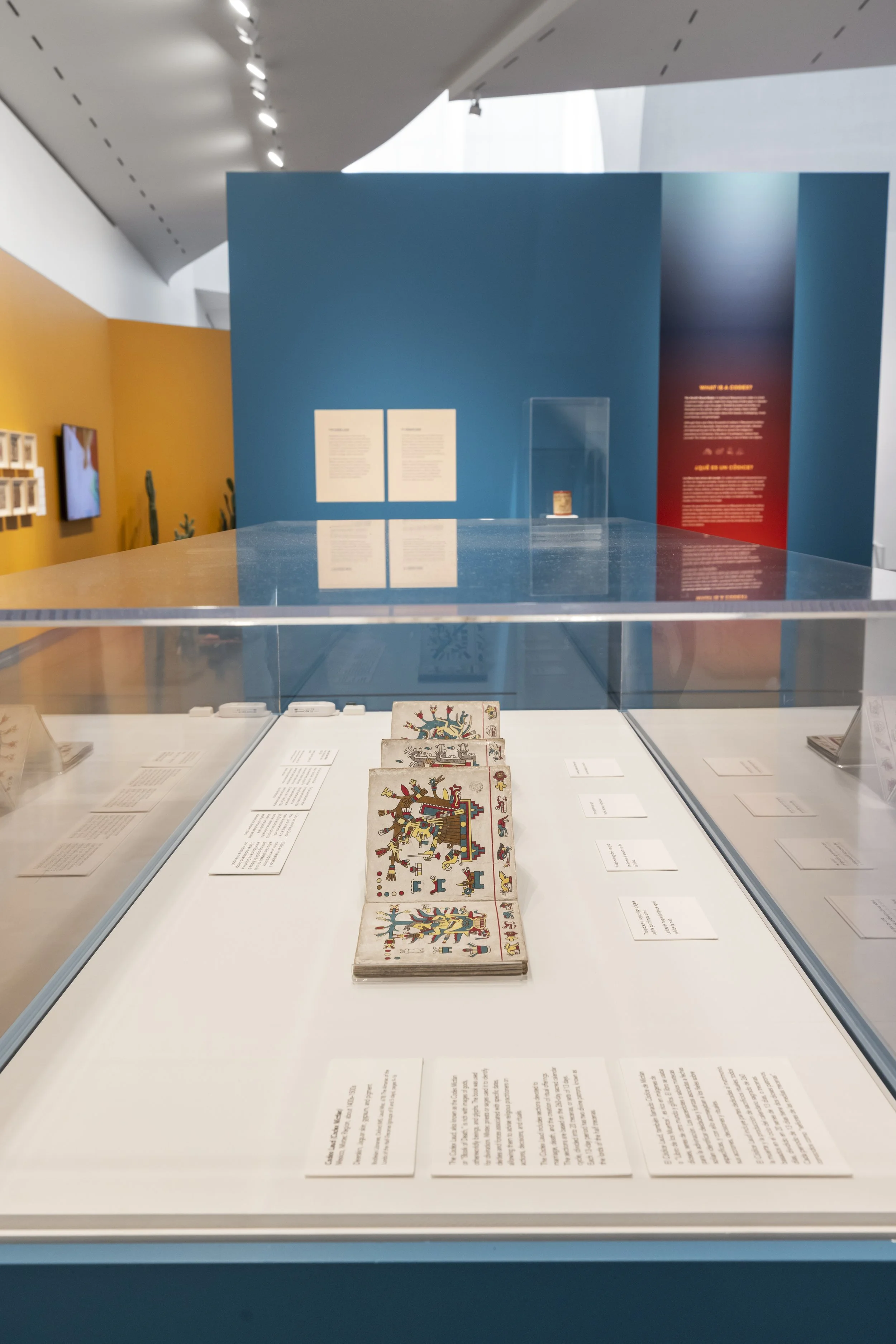
Installation view of “Painted Worlds.” Photo by Dana Anderson, courtesy of the Nelson-Atkins Museum of Art.The work and histories of colonized people, when archived and curated by the hands of the colonizer, may always carry a trace of violence—through dismissal, negligence, delegitimization, and alien/abstract perspective.
But, I dare to believe that the same point of capture and departure can also act as a point of liberation and reentry. The archive, whether written, visual, or embodied through song and dance, can act as a portal of remembrance that honors what lives and churns beyond the painting, beyond the word, in the lives and cultures that created the artifacts and the narratives before our eyes.
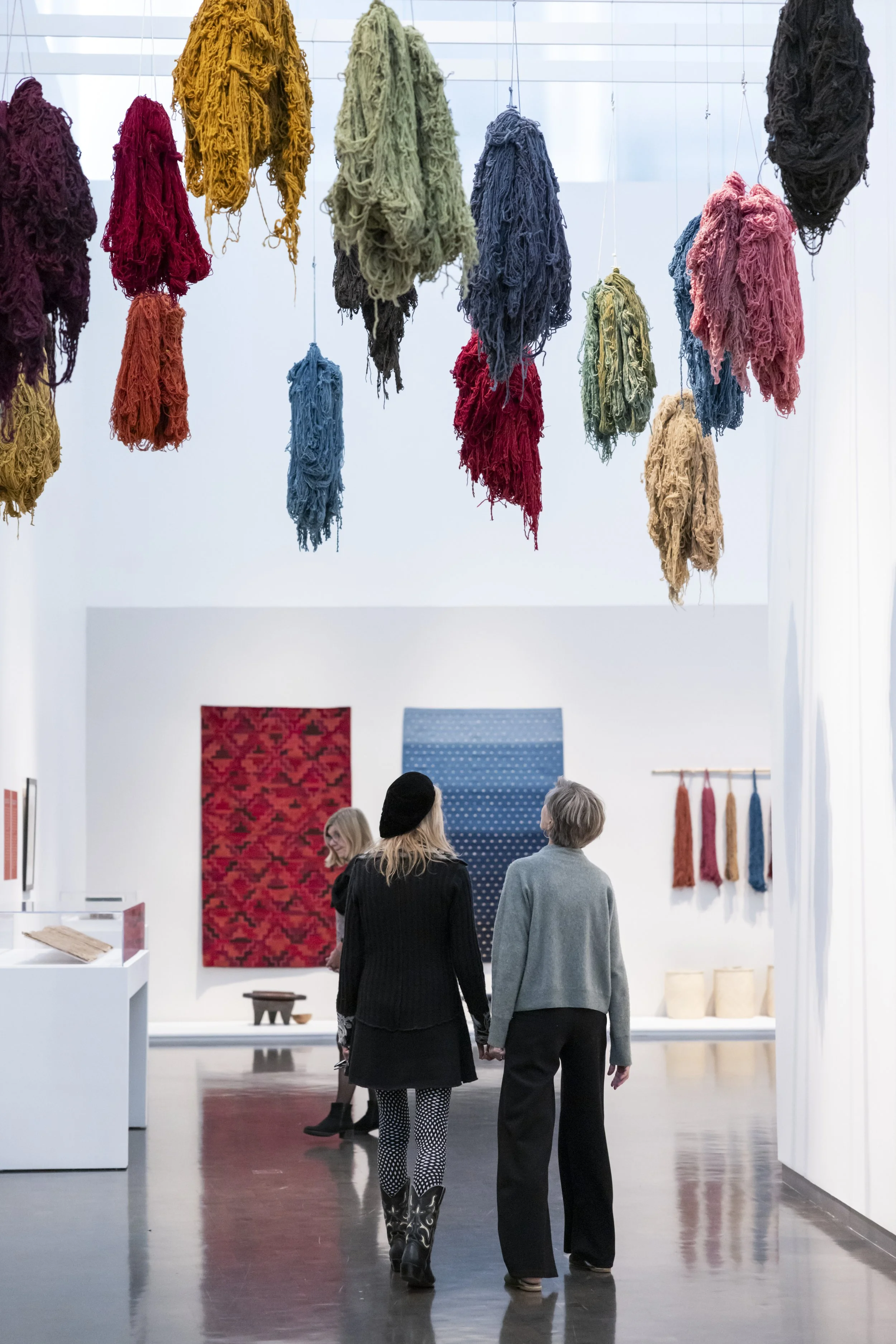
Installation view of “Painted Worlds.” Photo by Dana Anderson, courtesy of the Nelson-Atkins Museum of Art.No matter whose hands assembled the collection, there will always be hearts hungering for return that transforms these cultural breadcrumbs into holy feasts. As relation and reverence reenters the realm of curation, as we create and archive our own portals to pass down to future generations, as marginalized individuals are recentered as experts of their own cultures and experiences, I hope to witness the archive transform into sites of education. Ones that lead an audience out of their ignorance and into the active process of knowing themselves and the neighboring cultures with whom they share this planet.